
The Silent Boardroom Crisis: Employee Disengagement
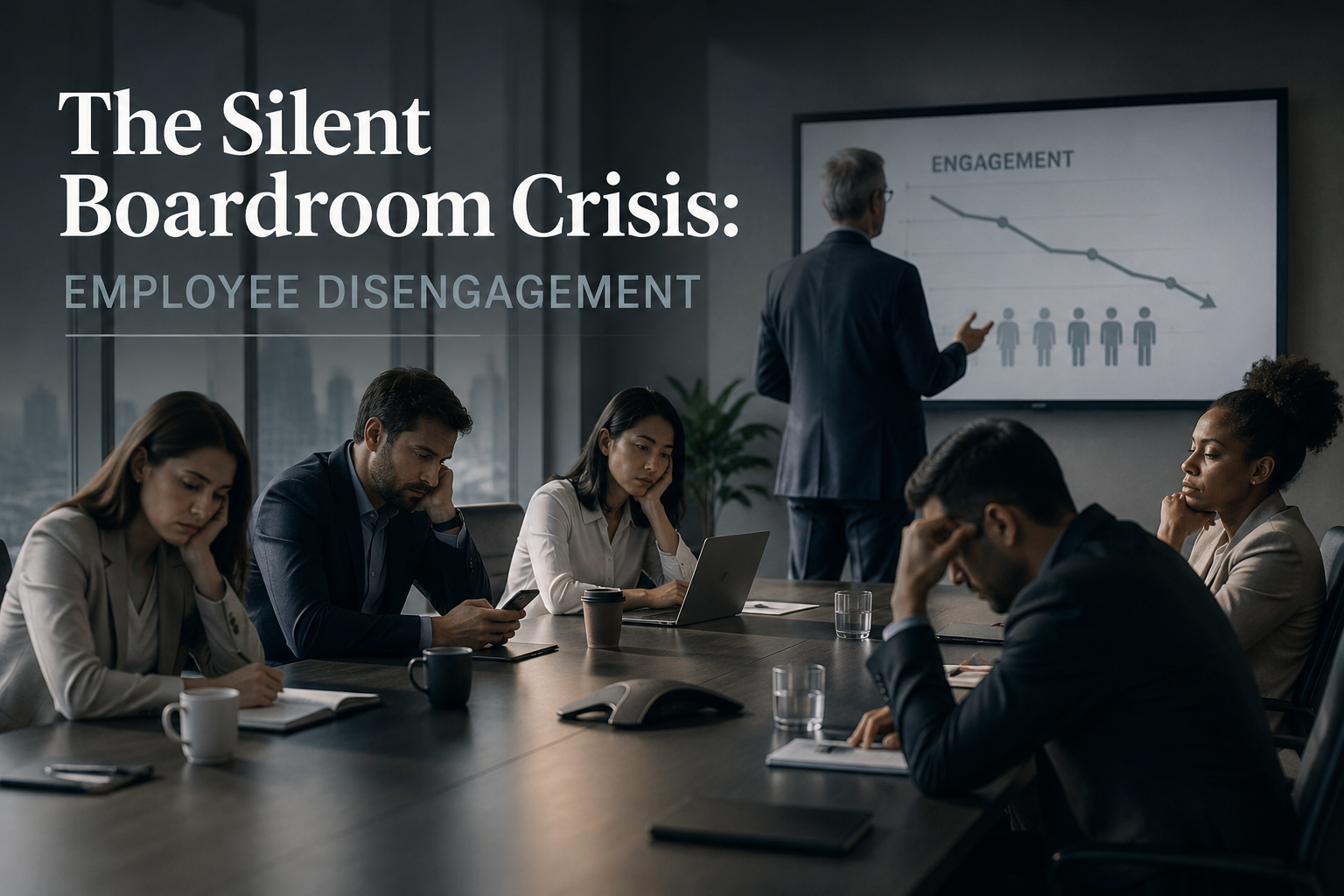
If you run an average team or organisation, 80% of your employees are likely to be disengaged - doing the bare minimum - or actively disengaged - resentful and undermining.
That stat from Gallup is alarming and in this article I’m going to be exploring why this happens and how to fix it.
The world is going through some pretty major upheavals just now. The old order is falling apart and what used to work, works no more. One aspect of life, which is becoming increasingly unreliable, is the age-old transaction of work for money.
It’s no longer enough that you pay someone and then sit back and expect the job to get done. The era of the wage-slave has been dying for some time and now the coffin is ready and waiting.
And of course the sight of the super-rich on social media only serves to accelerate the discontent with the status quo - which may be no bad thing.
So why won’t people just knuckle down anymore and get on with the job you’re paying them to do. After all, they need the money to pay the bills and support their families - shouldn’t they be grateful?
No doubt, seeing what others can achieve is motivational, but what is it that they crave that is missing from the average job?
At this point, particularly having mentioned the super-rich, it would be easy to assume that money is the issue - that paying people more to give them the lifestyles that they aspire to would balance the work-pay equation and put the whole thing to bed.
However, we know that doesn’t work. In fact it can easily make things worse by chaining people to their jobs from which they can no longer afford to move.
There’s a thought experiment clients do in my Neophyte Program which involves being employed to dig holes and fill them in again for a premier league footballer’s salary. First I ask if they would do the job. Most people say yes. Then I ask how long they would last, to which the response is a few days or a couple of months at most.
When I ask why, the answer always comes back: because it has no purpose and no meaning. And that is exactly what people increasingly want from their employment - meaning and purpose.
Money is a hygiene factor which, beyond a certain threshold ceases to act as a motivator, whereas meaning and purpose are fast becoming non-negotiable must-haves.
So what are meaning and purpose? Meaning is, at its root, a feeling of connection with something greater - an aspect of unity which is very close to the human heart. You can feel it watching birds in the garden, reading a book, or running a company.
Purpose is more active and is the urge to put yourself out there in some way - to make an impact on the world. But in a way that has meaning for you.
Without meaning and purpose, no amount of money will truly compensate for any work that you do. This is what humanity is waking up to and why pay is no longer enough to keep your employees doing what you need them to do.
So how do you give your people the meaning and purpose they yearn for?
Let’s get one thing completely straight. You cannot give anyone a purpose - nor is it your job to do so. Why? Because that’s their responsibility. What you can do - and must do - is to give them your vision of what you, your team and your organisation are trying to achieve.
Now a vision is just what it says - something out there in the future that you are aiming for. A direction, goal or objective. Your prime directive as leader is to articulate and communicate the vision to all concerned - even if you do nothing else. And if your people derive a sense of purpose and meaning from your vision, they won’t need motivating - they’ll be inspired.
Of course your vision won’t inspire everyone - their sense of purpose may not align with what you’re trying to achieve. The very worst thing you can do in that situation is to pay them more to keep them. Rather an honest conversation and a parting of the ways is the only viable option.
Seen through this lens, all the discontent that we are witnessing in the workplace is actually a powerful catalyst for transformation Rather than rail against it and hark back to the ‘good old days’ when people just did what they were told by managers, we’re being invited to step up to the next level of real leadership - leadership from the inside out.
Subscribe to my YouTube channel if you liked this article and try out my Leadership Scorecard - link in the description. See you in the next one.